.svg)
The Köbes in a Düsseldorf Brauhaus: Rules, History and Humor


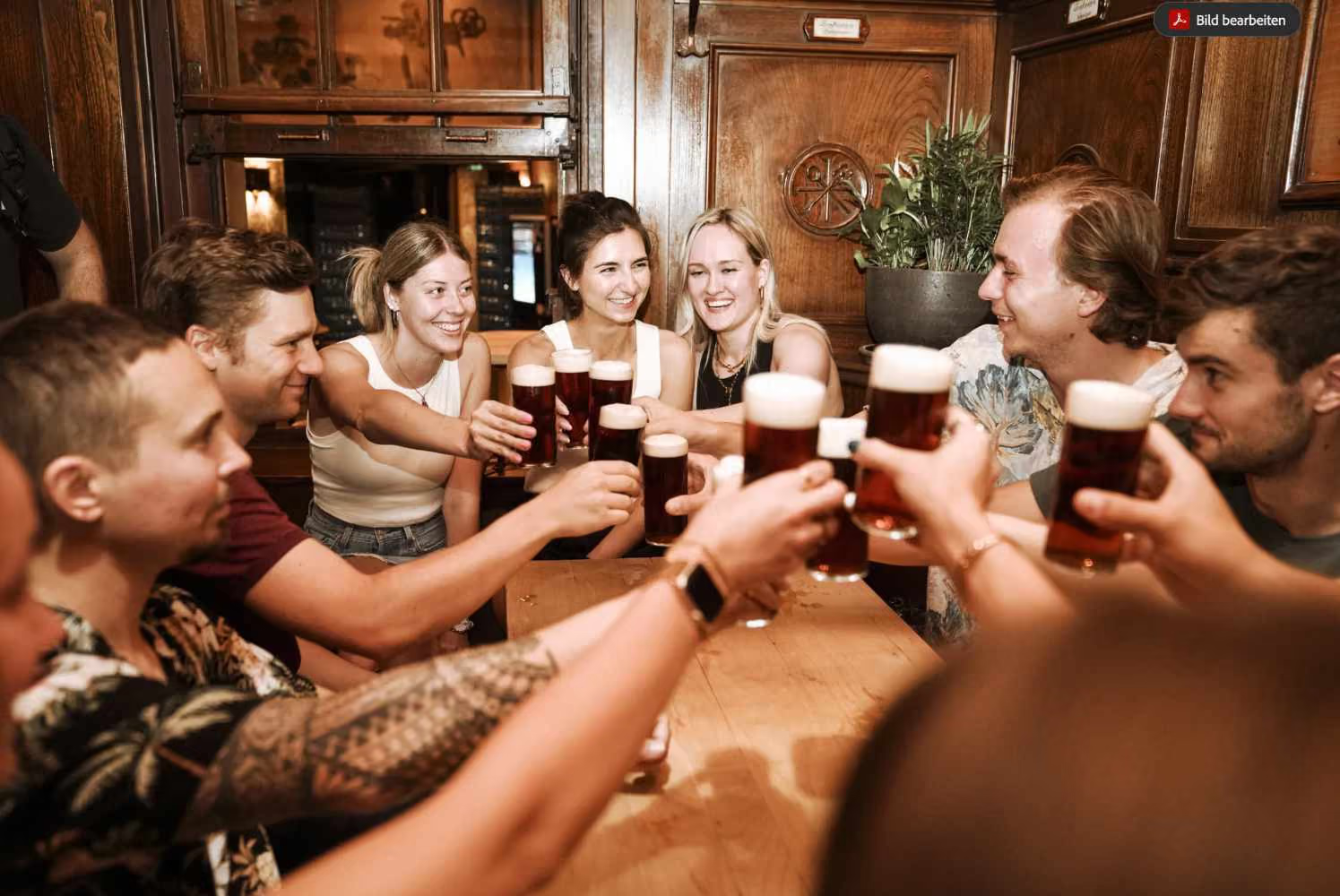
You are sitting in a Düsseldorf Brauhaus, your Altbier glass is empty and, moments later, another one appears on the table. You may not have explicitly ordered it. The person responsible is the Köbes.
A Köbes serves Altbier, records each drink on the Bierdeckel, the traditional beer mat, and keeps track of a busy room. For many visitors, the Köbes’ direct manner and dry humor are as much a part of the experience as the beer itself.
What Is a Köbes?
Köbes is the name for the traditional server in Rhineland Brauhäuser, especially in Düsseldorf and Cologne. Historically, a Köbes was closer to a brewery assistant or brewery hand than a formally trained waiter. This background is often used to explain the role’s confident and deliberately informal character.
Today, working styles and personalities naturally vary. Some Köbesse, the plural form, are particularly quick-witted, while others are quieter. The core task remains similar: looking after guests, coordinating orders and, above all, ensuring that Altbier reaches the table freshly poured.
Why Does the Köbes Bring Another Altbier Without Being Asked?
In many traditional Düsseldorf Brauhäuser, an empty glass is treated as a signal for a refill. The Köbes will often place another Altbier on the table automatically, so guests do not have to order every glass separately.
The system suits the small Altbier glass and the fast serving rhythm of a Brauhaus. It does not work in exactly the same way in every venue. To make it clear that you do not want another beer, place your Bierdeckel on top of the empty glass.
What Do the Marks on the Bierdeckel Mean?
Traditionally, the Köbes adds one mark to the Bierdeckel for every Altbier served. At the end, these marks are used to calculate the bill.
The Bierdeckel therefore has three functions: it protects the table, acts as a simple drinks tally and serves as a stop signal. When it is placed on top of the empty glass, it generally means that no further Altbier is wanted.
Why Is the Köbes Sometimes So Direct?
Long, formal exchanges are not necessarily part of the classic Brauhaus tone. Dry comments, short answers and the occasional teasing remark are often understood as part of Rhineland Brauhaus culture.
This should not be confused with genuine rudeness. Traditional Köbes humor relies on a wink and a certain quickness of mind. At the same time, normal standards still apply: guests should be treated respectfully and can clearly say when something makes them uncomfortable.
Where Does the Name Köbes Come From?
Köbes is a Rhineland dialect form of the name Jakob. How the name became the term for a traditional Brauhaus server is not conclusively documented.
One well-known story links the word to pilgrims of Saint James who supposedly worked in Brauhäuser while traveling to Santiago de Compostela. The story is popular, but it is generally treated as a legend rather than a proven explanation from linguistic history.
Broader linguistic developments around the once-common name Jakob, or earlier secondary meanings of the word, are considered more plausible. The careful conclusion is therefore simple: the connection to Jakob is established, but the exact origin of the occupational term is not.
How Can You Recognize a Traditional Köbes?
Typical features include an apron, a leather money pouch and a Bierkranz, the circular carrier used to transport several freshly poured glasses. Clothing and routines vary by Brauhaus, but the role is usually easy to recognize: the Köbes moves quickly between the taps and the tables, organizing the flow of fresh Altbier.
Four Tips for Your First Brauhaus Visit
1. Only place the Bierdeckel on your glass when you genuinely do not want another Altbier.
2. Do not take every dry comment personally.
3. Check the marks on your beer mat before paying.
4. Be patient when the Brauhaus is busy: Köbesse often look after many tables at once.
Why Is the Köbes So Closely Associated with Düsseldorf?
The Köbes combines service, tradition and entertainment. He shapes the rhythm of the Brauhaus and turns serving beer into an experience with its own unwritten rules. Since 2024, a Köbes monument in Düsseldorf’s Altstadt has even commemorated this distinctive role.
Experience Our Düsseldorf Brewery Tour
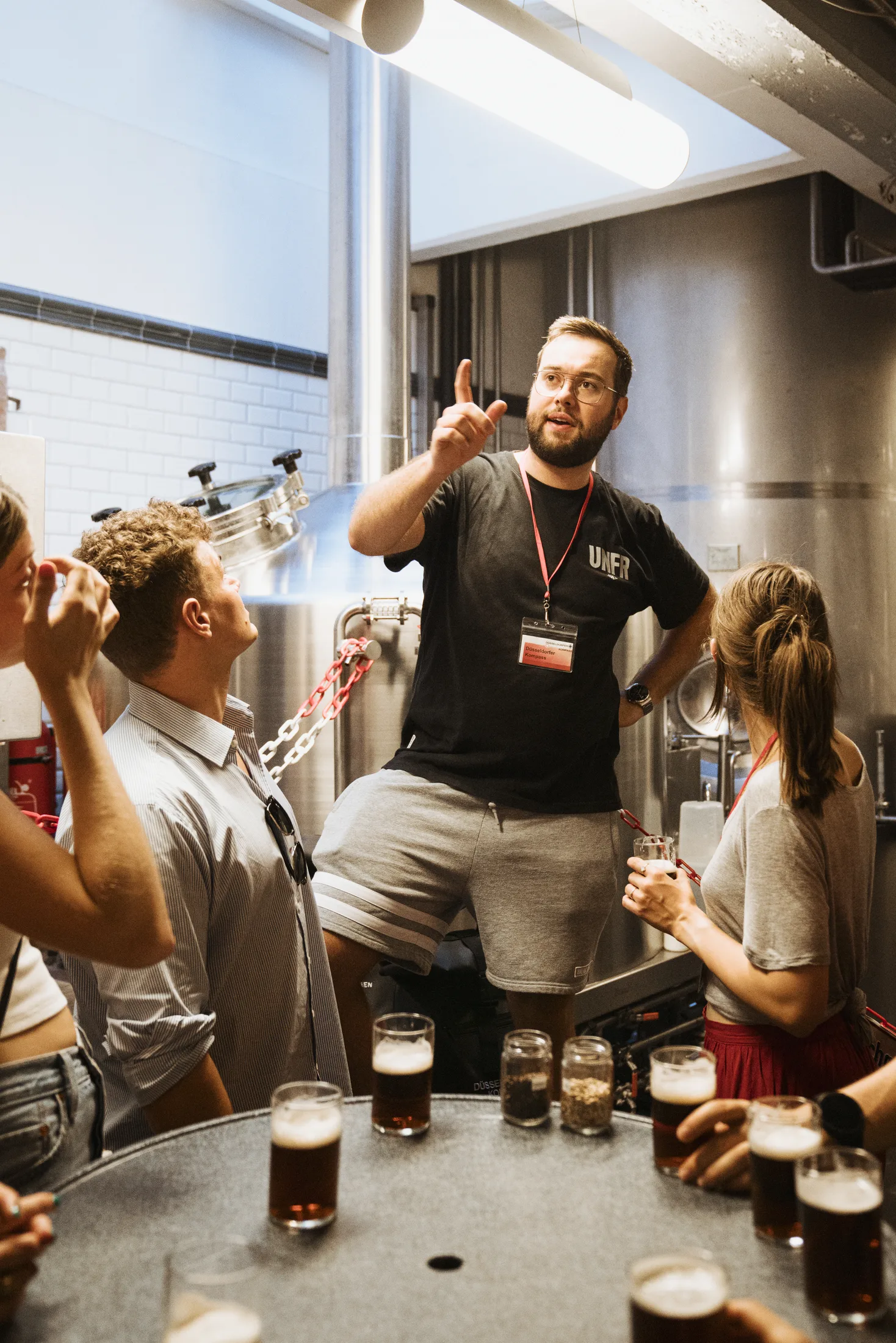
On our Düsseldorf brewery tour, you will learn how the Köbes works, when the Bierdeckel belongs on top of the glass and which unwritten rules apply in traditional Hausbrauereien. You will also taste Altbier and discover the stories behind Düsseldorf’s Brauhaus culture.
Ready when you are!
We look forward to exploring historic breweries, hearing stories about Düsseldorf, and enjoying freshly tapped Altbier with you.

Related posts
What else is going on in Düsseldorf!


Join the tour